People and literary associations
From the free men of Domesday to a New Zealand novelist who lived here in the 1960s — the people the record remembers.
Braiseworth has never held many people — 171 at its Victorian peak, a few dozen today. But the parish registers, manor rolls, newspapers and archive catalogues remember a good number of them by name. This page gathers the people the record can still name.
How many lived here
| Year | Population | Inhabited houses |
|---|---|---|
| 1086 | about 36 recorded (Domesday) | — |
| 1603 | 36 adults | — |
| 1801 | 105 | 19 |
| 1851 | 171 (the peak) | 29 |
| 1871 | 160 (164 in Wilson’s 1870 gazetteer) | 28 (30) |
| 1901 | 113 | 24 |
| 1951 | 97 | 25 |
| 1981 | 52 | 20 |
| 2021 | see note below | — |
Source: Suffolk County Council Archaeological Service, Parish History Pack: Braiseworth (2014), section 9; J. M. Wilson, Imperial Gazetteer (1870–72) via A Vision of Britain
Braiseworth is classed by the Office for National Statistics as a “census merged parish” — too small to be published on its own (fewer than about 50 residents, or 20 households) — so its 2021 Census figures are released only combined with a neighbouring parish. There is therefore no separate 2021 population count for Braiseworth alone.
Source: Office for National Statistics, “Build a custom area profile”, which lists Braiseworth as a census merged parish (accessed 25 August 2026)
The Victorian rector: Robert Mildred Bingley
The rebuilding of the church in 1857–58 (see The churches) happened under the Reverend Robert Mildred Bingley, rector from at least 1854. In 1857 he exchanged a piece of glebe land with Henry Bingley of Woodford, Essex — and a contemporary newspaper appears to name a Henry Bingley as the largest contributor to the cost of the new church and as the rector’s father, though that report is too damaged to be certain. A “Rev. R. M. Bingley” was still writing to Lord Henniker about the parish school in the early 1900s; Herbert Drake was appointed rector in 1907.
Source: Suffolk Archives (The Hold, Ipswich), FB 126/C5/1 (1854), FB 126/C4/2 (1857), FB 126/M1/1; Lambeth Palace Library, Davidson 127 (1907); and the Chelmsford Chronicle, 12 March 1858, via the British Newspaper Archive (donor claim unverified)
A Baptist meeting, 1851
Braiseworth was not only an Anglican parish. The religious census of 1851 records a Baptist place of worship in the parish, its congregation begun in 1835, with the return signed by Rebecca Hart, a landowner. On census Sunday that March the Baptist afternoon meeting drew about twenty people — as many as the curate said usually came to the parish church.
Source: The National Archives, Discovery catalogue, HO 129/218/52 (1851 Ecclesiastical Census return for Braiseworth)
Everyday lives in the record
The archives name Braiseworth people across seven centuries: William de Braiseworth, a debtor in 1309; Anne Warner, a widow whose will was proved in 1580; the Coleman family of gentry, one of whom was patron of the living in 1603; yeomen and husbandmen whose settlement papers passed them between Braiseworth and Yaxley through the 1700s; John Allen, farmer, whose 1798 will lies behind the name of Allen’s Farmhouse; and, on the war memorial, six men of the parish who did not come home from the two world wars.
Source: The National Archives, Discovery catalogue and Suffolk Archives (The Hold, Ipswich) (catalogue references listed in the research library); Imperial War Museums, War Memorials Register, WMR 4705
Janet Frame and The Adaptable Man
Braiseworth’s best-known literary link is to one of New Zealand’s greatest writers. Janet Frame (1924–2004), author of Owls Do Cry and of the autobiography filmed as An Angel at My Table, lived in rural East Suffolk from 1962 and, by several accounts, spent a period in or around 1963 at Braiseworth before returning to New Zealand. Her time in the area fed into her fifth novel, The Adaptable Man (1965), set in a fictional East Suffolk village.
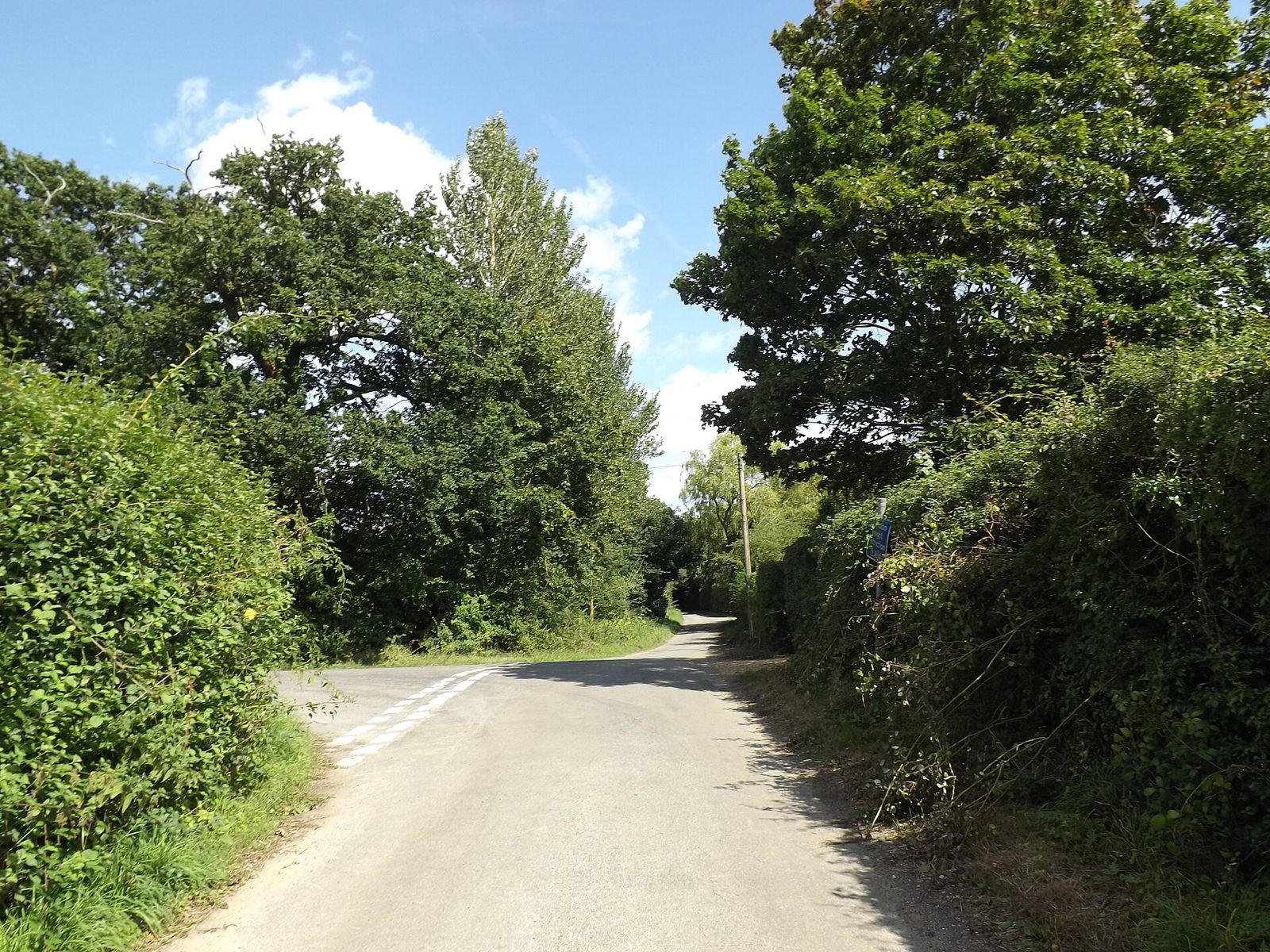
An old English community, barely changed since the war, meeting the modern world — the subject Janet Frame drew from these lanes.
The Adaptable Man, 1965
Source: Wikipedia, “Braiseworth” and “Janet Frame”; Auckland University Press, The Frame Function; Te Ara, Dictionary of New Zealand Biography
Last verified 25 August 2026